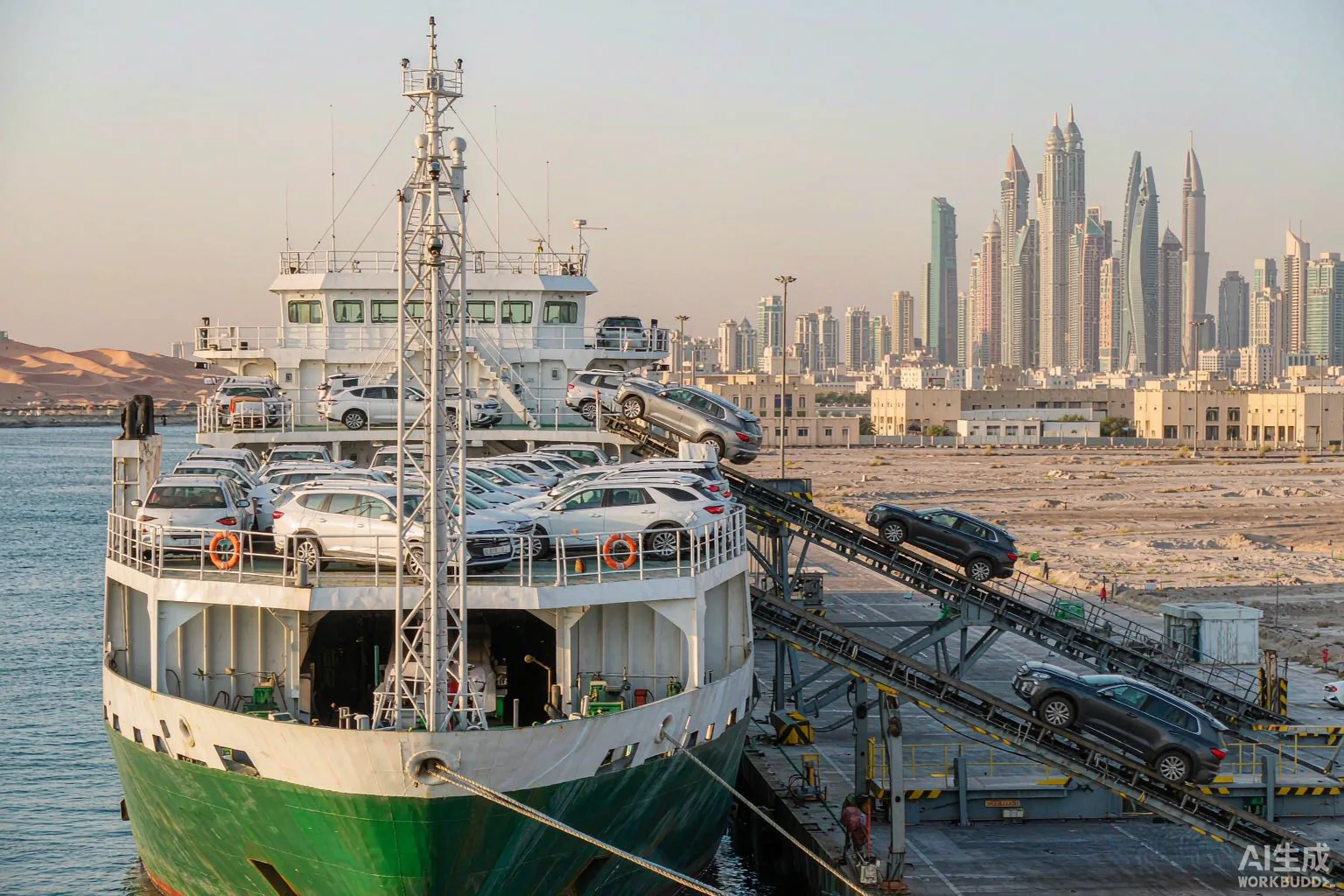
Step 1: Confirm GCC Compliance
Saudi Arabia expects vehicles to meet GCC specification — emissions, lighting, fuel, and safety aligned to Gulf standards. Importing non-GCC-spec units invites rejection at the conformity stage.
- Verify the model carries valid GCC certification or an accepted equivalent.
- Confirm model-year acceptance and any prohibited modifications.
- For NEVs, check charging compatibility and incentive eligibility.
We pre-screen every unit against the destination market's spec sheet before it is loaded, so non-compliant stock never leaves the factory.
Step 2: Prepare the Documentation Pack
| Document | Purpose |
|---|---|
| Commercial invoice | Value declaration for duty assessment |
| Packing list | Itemized cargo manifest |
| Bill of lading | Proof of shipment & ownership in transit |
| Certificate of origin | Trade-status & preference evidence |
| Conformity / SABER certificate | Mandatory product conformity for Saudi entry |
| Insurance certificate | Coverage during transit |
A missing or mismatched line here is the #1 cause of clearance delays. We assemble and cross-check the full pack per shipment.
Step 3: Customs Clearance in Saudi Arabia
On arrival, the shipment enters the Saudi clearance pathway:
- SABER registration — product & shipment conformity certificates must be active.
- Customs declaration — submit via the national trade platform with the document pack.
- Duty & VAT — automotive duty plus the standard 15% VAT are assessed on customs value.
- Inspection — physical or documentary inspection per risk profile.
- Release — once cleared, arrange inland transport to Riyadh, Jeddah, Dammam, or your distribution hub.
Step 4: Delivery & Distribution
Plan inland movement early. Major receiving points are Jeddah (West), Dammam (East), and Riyadh (Central). We can coordinate with your local freight forwarder so the truck is booked before the vessel berths.
Why Partner With a HK-Registered Exporter
- Contract certainty under a common-law jurisdiction familiar to international trade.
- Spec control — GCC-ready units, not retrofitted surprises.
- One throat to choke — compliance, freight, and documents under one accountable partner.
Tell Us What You Want to Source
Tell us your target models, volume, and destination port. We return a compliant sourcing plan and an FOB quote with a clear Incoterms basis.
- WhatsApp: WhatsApp — for specs, stock, and sailing schedules
- FOB quote request: visit our contact page
Planning a Vehicle Purchase?
A short call on GCC spec and documentation usually prevents the most expensive mistakes. Talk to an advisor before you commit volume to a container.